Best K40s
K Series laser head · D12/D18/D20 FL50.8 · 20mm mirror

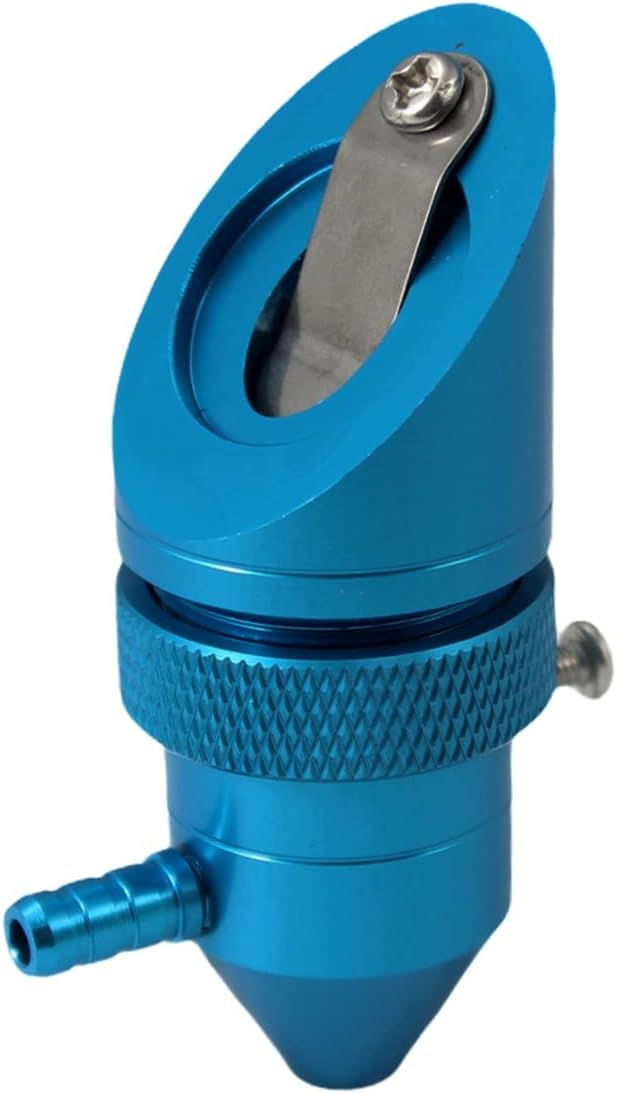
LSYAMQF K Series CO2 Laser Head Set

A K Series integrated head for 2030, 4060 and K40 machines, sold in lens-size sets with a choice of CVD or PVD lens, blue or red finish, and an optional second mirror mount.

  • Lens setsA: D12, B: D18, C: D20, all FL50.8
  • Mirror20mm
  • Lens gradeCVD or PVD ZnSe
  • MountingJoint plate and belt fastener
  • Air assistBuilt-in air nozzle
Right for
  • K40 owners moving to a 20mm focus lens in a K Series head
  • Rebuilds that also need a second mirror mount
  • Buyers who want to choose lens grade as well as size
Wrong for
  • Anyone expecting a screw-for-screw copy of the stock K40 head
  • Machines whose gantry plate has no room for a belt-clamp head
View offer
Bundles

Two routes into the LSYAMQF K Series

Choose lens size, grade and colour on the K Series head

The LSYAMQF head is a K Series head, the integrated style used on 2030 and 4060 CO2 machines as well as the K40. It holds a 20mm mirror above a lens tube built for a 50.8mm focal length. Where drop-in K40 heads are sold as one part, this one is sold as a set you configure on three choices at once.

ChoiceOptionsHow to decide
Lens sizeSet A D12, Set B D18, Set C D20Match the lens you own, or step up to 18 or 20mm for more spare choices
Lens gradeCVD or PVD ZnSeCVD for a machine that cuts daily; PVD for light hobby use
ColourBlue or redLooks only; no effect on the beam

CVD zinc selenide is the grade most lens makers treat as their better option; PVD is the cheaper process. On a K40 that runs a few hours a week the difference is modest. On a machine that cuts plywood every day, the CVD lens is the one to fit.

The same head family also offers a second mirror mount and bundles with silicon or molybdenum mirrors. If you are replacing the head because the machine has had a hard life, those options let you swap the whole last leg of the beam path at once.

  • Set A (D12) keeps your stock 12mm lens size.
  • Set B (D18) is the common middle ground for K40 cutting.
  • Set C (D20) opens up the widest choice of replacement lenses.

Write down which set you ordered and keep the note inside the machine lid. Six months later, when the lens needs replacing, you will want to know its diameter and grade without pulling the head apart to measure it.

Specs

Measurements & ratings

SpecValue
BrandLSYAMQF
Head typeK Series CO2 laser head set
Compatible machines2030, 4060 and K40 CO2 lasers
Lens diameters12mm / 18mm / 20mm
Focal length50.8mm
Mirror diameter20mm
Set AD12 F50.8 lens
Set BD18 F50.8 lens
Set CD20 F50.8 lens
Lens grades offeredCVD or PVD ZnSe
Mirror options offeredSi or Mo reflect mirror
Body materialAluminium alloy
Finish optionsBlue or red
Air assistAir assist nozzle
Mounting hardwareJoint plate and belt fastener
Lens retentionLocking ring with plastic buffer ring
Extra part offered2nd mirror mount

Bolt the joint plate and belt fastener to the gantry

A K Series head does not just screw onto the stock K40 head plate. It carries its own joint plate and belt fastener, so it becomes part of the gantry: the plate bolts to the carriage and the fastener clamps the X-axis belt. That makes it sturdier than a small bolt-on head, and it also means you must check the geometry before you order.

  1. Unplug the machine. The high-voltage supply stays dangerous after switch-off; keep it unplugged while the lid is up.
  2. Look at your carriage. Note where the stock head bolts, where the belt clamps, and how much room sits between the carriage and the front frame.
  3. Compare the belt path. The new belt fastener must line up with your belt height, or the belt will run at an angle and wear.
  4. Check the mirror height. Mirror two's beam has to land in the middle of the head's 20mm mirror; a head that sits higher or lower needs shims or an adjusted mount.
  5. Plan the air line. The head has an air nozzle; run silicone hose along the gantry with slack for full travel.
Fit check: the K Series set names the K40 among its machines, but K40s are built with different plates and belt clamps. If your carriage layout is unusual, expect to drill a hole or make a simple adapter plate.

After fitting, align the whole path from mirror one with the K40 alignment method. Then run a ramp test to find the new focus height, because a K Series head rarely sits at the stock head's height. The K40 dimensions page helps when you are measuring bed-to-head clearance.

In the catalogue

Where it slots in

K40 laser models by type, September 2026. Highlighted: LSYAMQF K40 Laser Head.

Go easy on the locking ring: the buffer ring is there for a reason

LSYAMQF holds the lens with a locking ring and a plastic buffer ring between them. The buffer spreads the clamping force and keeps metal off the lens coating. Crank the ring down hard and you can still crack a ZnSe lens, buffer or not.

  • Seat the lens curved side up, towards the mirror, flat side to the work.
  • Tighten finger-snug, then stop. The lens should not rattle, and that is all you need.
  • Keep the buffer ring. If it goes missing, replace it before cutting; a bare metal ring can chip the lens edge.
  • Use the right tool. A spanner tool that fits the ring's slots will not slip and gouge the lens.

Clean the lens whenever the cut starts to look tired, and after any flare-up. Remove it, wipe once with lens fluid on a soft swab, check it against a light, and refit. A lens with a brown burn spot in the middle will not clean up; replace it.

Mirrors need the same gentle hand. Silicon mirrors reflect a little more but the gold coating scratches; molybdenum mirrors reflect slightly less but shrug off repeated cleaning. On a smoky machine without good extraction, molybdenum is the forgiving choice for the head mirror.

Air assist protects all of this. With the nozzle fed from a steady pump, smoke is pushed down and away from the lens, and cleaning intervals stretch out. Without air, a lens in any head fogs quickly on plywood.

Store spare lenses flat in their cases, away from the machine's dust and the shop's humidity. A lens that has sat in a damp drawer can fog before it ever meets the beam.

Also consider

Worth comparing

1 FONLAND K40 Laser Head
FONLAND K40 head and mirror-mount set FONLAND K40 Laser Head
Head with 1st and 2nd mirror mounts and a 20mm lens tube adjustable over 78–82mm.
  • Upgraded laser head
  • 18mm optics
  • Air assist built in
View offer
2 Cloudray ZnSe Focus Lens
Cloudray K Series whole set Cloudray ZnSe Focus Lens
K Series head and mirror mounts that arrive with a D20 FL50.8 focus lens and molybdenum mirrors.
  • Replacement optics
  • 20mm optics
  • Fits K40-size CO2 lasers
View offer

Where LSYAMQF sits against drop-in K40 heads

Drop-in air-assist heads such as the Lightobject and FONLAND replace only the head on your existing plate. The LSYAMQF set is a bigger change: a K Series head with its own plate, belt fastener and optional second mirror mount. That brings strength and upgrade room, and a little more fitting work.

  • Pick LSYAMQF when you want a 20mm lens in a K Series head and you are happy to adapt the gantry.
  • Pick a drop-in head when the carriage is healthy and you want a one-hour job.
  • Pick a full carriage set like the CNCOLETECH kit when the carriage itself is bent.

The K Series format has one more advantage for owners who plan to keep upgrading. The same head style runs on 2030 and 4060 machines, so lenses, mirrors and mounts in this format stay useful if you move up to a larger CO2 laser later.

Settle these points at the machine:

  • Your lens: order the set that matches it, or the one you want to move to.
  • Your grade: CVD for daily cutting, PVD for occasional hobby jobs.
  • Your gantry: belt height and plate holes must suit the joint plate.
  • Your mount: add the second mirror mount if the old one is worn or bent.

Wear CO2-rated goggles for every alignment test fire, and never run a new head unattended on its first cuts. The K40 upgrade order shows where a head sits among the fixes that pay back first.

Shop talk

Fit & install questions

Does the LSYAMQF head fit a stock K40?

It is a K Series head that names the K40 among its machines, but K40 gantries differ. Check your plate holes and belt height; some machines need a simple adapter.

Which lens comes with each set?

Set A has a D12 F50.8 lens, Set B a D18 F50.8 and Set C a D20 F50.8, each in CVD or PVD grade.

What size mirror does it use?

20mm, the same size as the stock K40 mirrors.

Should I choose CVD or PVD?

CVD for a machine that cuts often; PVD is the cheaper grade and suits light hobby use.