Best K40s

K40 Laser Cutter Salvage and Upgrades, in Order of Payoff

A tired K40 is worth rescuing when the tube and power supply still work, and a new one improves fast with the right parts. Fix air, bed, exhaust and cooling before you chase the clever upgrades.

Current as of September 2026
Upgrade order

Before any of this: earth the chassis, put a flow switch in the water loop and keep 10,600nm glasses by the machine. Then work through the K40 laser cutter upgrades in this order, biggest payoff first.

  1. An air-assist head plus a real air pump: cleaner cuts, a protected lens and less fire risk.
  2. Pull the spring clamp and fit a honeycomb bed or a Z table set at focus height.
  3. Swap the weak exhaust blower for a stronger fan, trim the duct out of the work area and vent outdoors.
  4. Replace the aquarium pump with a stronger pump or a chiller.
  5. Fit a GRBL controller if you want LightBurn and per-layer power.
  6. Upgrade optics: an 18mm lens and silicon or molybdenum mirrors.
  7. Add the rotary, a red-dot pointer and other extras last.
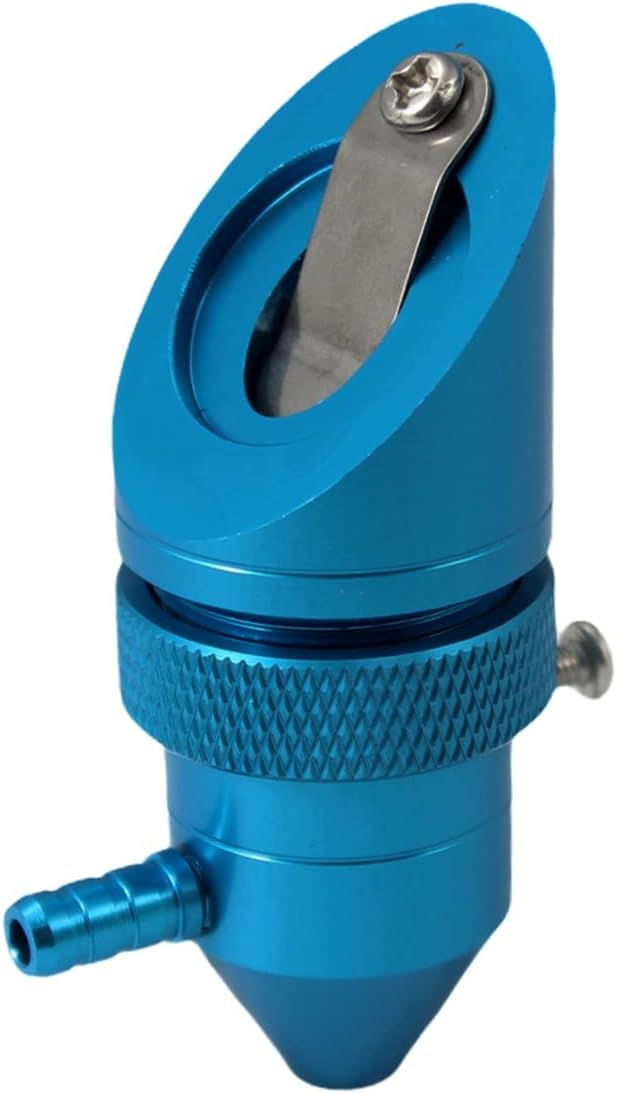
Lightobject K40 Air-Assist Head
Best first upgrade Lightobject K40 Air-Assist Head

The air-assist head K40 owners fit first, with a hose connector on the nozzle and seats for common K40 lens sizes. It is the single part that changes cut quality most on a stock machine.

View offer

Triage a salvage K40 before you buy a single part

A used or dead K40 is worth rescuing when its tube lases and its power supply fires. Everything else on the machine is cheap to replace, so check those two first and price the rest afterwards.

Look before you power anything. Then test in a set order, with glasses on and the water flowing:

  1. Tube: look along the glass for cracks, especially at the ends. Check the water jacket for algae or scale, which points to months of tap water.
  2. Glow: fire a short, low-power pulse. A healthy tube shows an even pink-purple discharge; a white or blue glow usually means the gas has leaked or degraded.
  3. Power supply: listen for its fan and confirm the test button fires the tube.
  4. Motion: home the gantry and jog both axes. Loose belts and dirty rails are easy fixes; a dead stepper driver means a new board.
  5. Optics: pull the lens and mirrors. Pits and burns mean replacement, which is cheap.

If the tube or the power supply is dead, the machine can still pay its way as a donor. Salvage the K40 laser parts that transfer to another machine:

  • A working tube or power supply, the two costly parts.
  • The stepper motors, belts and the whole gantry.
  • The lens, mirrors and their mounts.
  • The M2 Nano board, which keeps a second K40 running.
Treat the power supply as live even when unplugged. Its output reaches lethal voltage, and the high-voltage side can hold a charge. Unplug, wait, and never touch the thick red tube lead or the anode end while testing.
Second upgrade

Then give the head real air

Cloudray 135W Air Compressor
Best air source Cloudray 135W Air Compressor

A 110V, 135W piston air pump built for laser air assist, with enough flow to keep smoke off the lens and flame out of the kerf. Plug it into the same switched power strip as the laser so it never gets forgotten.

View offer
Specs

Complete specs for the top picks

Lightobject K40 Air-Assist Head
Model number
LSR-LH1820B
Maker
Lightobject
Designed for
K40 series desktop CO2 lasers
Focus lens diameter
15mm / 18mm / 20mm
12mm lens
Named in the product title; confirm fit
Mirror diameter
20mm
Body material
Aluminium
Finish
Metallic blue
Air assist
Built-in air-assist connector
Air plug outer diameter
5.5mm
Hose
5 x 8mm silicone (5mm ID, 8mm OD)
Replaces
Stock K40 head without air assist
Full breakdown →View offer
Cloudray 135W Air Compressor
Type
Electromagnetic linear piston air pump
Maker
Cloudray
Rated power
135W
Voltage
110V
Frequency
60Hz
Air flow capacity
120 L/min
Pumping capacity (second figure)
70 L/min
Noise
69 dB
Housing
ZL102 aluminum alloy, streamlined for heat dissipation
Cylinder and piston
SF3 wear-resistant material
Motor
Electromagnetic, straight-line reciprocating motion
Duty rating
Up to 1 year of continuous service
Full breakdown →View offer

Fit an air-assist head before any other upgrade

Air assist blows a jet down the nozzle onto the cut. It clears smoke, keeps flame out of the kerf, stops resin from coating the lens and gives cleaner edges on wood and acrylic.

The classic K40 head has no air nozzle, which is why charred edges and smoked lenses are the first complaints. The K-series replacement heads bolt to the same carriage and add a nozzle with a hose barb.

  • Lightobject head: the long-standing K40 choice, with an air connector on the nozzle.
  • Cloudray head: takes 12mm or 18mm lenses at 50.8mm focal length, or 16mm at 25.4mm. It cannot hold a 20mm lens.
  • FONLAND and MCWlaser heads: the same 12/18mm family, with an O-ring or spacer ring to seat the smaller lens.

Turning a stock machine into an air-assist K40 laser starts with the carriage bracket, since K40 mounts vary. Cloudray notes the head suits a bracket of M22 or M23 size and that not every K40 matches.

An aquarium pump is too weak for cutting. A piston pump like Cloudray's 135W unit moves real air, and a 5×8mm silicone hose suits the barbs on most of these heads. Route the hose through the cable chain or along the gantry so it cannot snag.

Keep the stock 12mm lens at first. Once the head is aligned, an 18mm lens gives you a larger target for the beam and a cheaper spare to keep on the shelf.

Part groups

K40 upgrade parts, grouped by job

Laser heads 3
Air assist 1
Beds & tables 2
Controller boards 2
Cooling 2
Lenses & mirrors 3
Rotary attachments 1
Supplies & tools 1
Safety 1

Pull the spring clamp and set the work at focus

The stock K40 bed is a spring-loaded clamp built for rubber stamps. It holds material off the focal plane, blocks part of the work area and turns every uneven board into a focus problem.

Every K40 laser bed upgrade starts by removing the clamp. Then choose between a fixed and an adjustable bed:

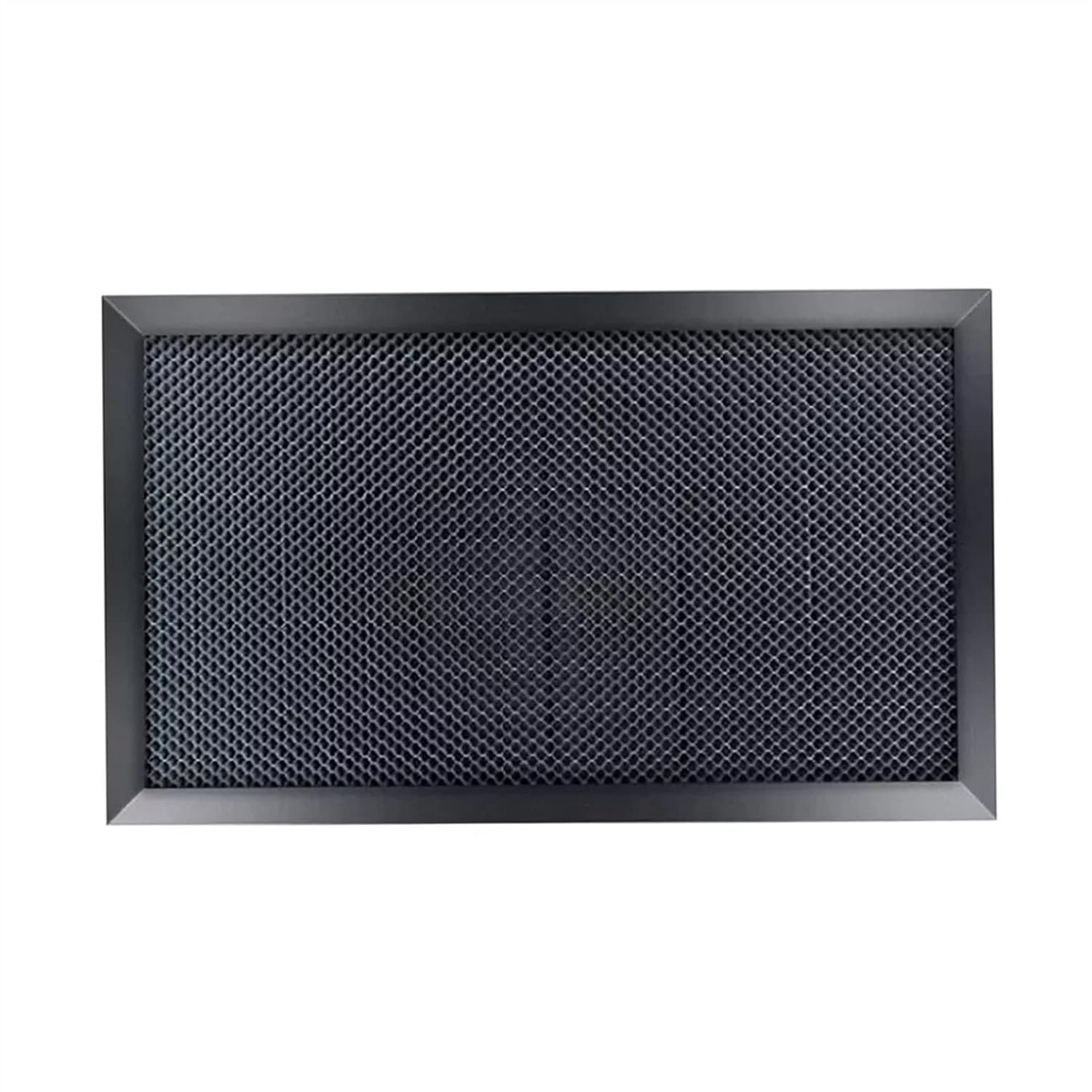
  • Honeycomb bed: a galvanized 300×200mm honeycomb panel supports thin stock flat and lets the beam pass through. Prop it on spacers so the surface sits at focus.
  • Power Z table: Lightobject's motorised table for K40-size machines raises and lowers the work, so you focus on thick and thin stock without shims.
  • Pin bed: a sheet of steel with adjustable pins, cheap to make, good for cutting since little of the bed touches the back of the part.

For a lens with a 50.8mm focal length, the top of the material sits about 50.8mm from the lens. Make a simple gauge block cut to your nozzle-to-surface distance and focusing takes seconds.

Can you increase the bed size?

Only up to what the gantry travels. Most classic K40s use far less than their full travel because the clamp and the exhaust duct get in the way. Trim the duct flush with the back wall and remove the clamp, and you gain most of the 300×200mm area.

Going beyond the gantry's travel means new rails, belts and a bigger case. That is a rebuild, not an upgrade. Honeycombs sized 400×300mm belong to bigger machines.

Keep the space under the bed clear of offcuts and dust. The beam passes straight through thin stock, and anything flammable below it becomes fuel.
Reference table

What fits a stock K40, part by part

PartStock K40What fitsCheck before ordering
Focus lens12mm, 50.8mm focal length12mm in the stock head; 18mm in most air-assist headsThe lens seat in your head
Mirrors20mm, often K9 glass20mm gold-plated silicon or molybdenum, 3mm thickThe diameter of all three mounts
Air-assist headNone on classic unitsK-series heads from Cloudray, FONLAND, MCWlaser, LightobjectCarriage bracket; 5×8mm silicone hose
BedSpring clamp300×200mm honeycomb or a Power Z tableFree height below the head
ControllerM2 NanoGRBL board with the 97×64mm Nano footprint, or an M3 NanoMounting holes, connectors, software
Tube700mm × 50mm, 40W700mm tubes drop in; 720mm needs spare roomBay length and mounts
CoolingAquarium pump in a bucketA stronger pump with a flow switch, or a CW-3000Hose barb size
RotaryNoneA 40W-45W rotary, after the bed comes outController support and height

K40s differ between factories and years. Measure your own parts; these are the common stock sizes.

Swap the M2 Nano board when you outgrow on-off power

On the stock M2 Nano, the board only fires or stops the beam, and the panel knob or buttons choose the power. That limits you to one power level per job and makes grayscale engraving a dithering exercise.

A GRBL controller changes that. The laser power becomes a PWM signal the software controls, so each layer gets its own power and photos engrave in real grayscale. It is also the only way to run LightBurn on a classic K40.

The MEFORE H2 is built as a drop-in, matching the M2 and M3 Nano's board size and hole pattern. It carries a 32-bit GD32 chip, A4988 stepper drivers and a CH341 USB chip, and it runs LightBurn or the maker's HCTriy software.

  • Lid and water protection inputs: wire them. They stop the laser when the lid opens or the water flow fails.
  • Static laser protection: cuts the beam if power stays above 20 percent and motion stops for five seconds, a real fire safeguard.
  • Test fire port: fires a low-power dot for alignment without burning the work.

The M3 Nano set is the other choice: a like-for-like LiHuiyu board with a control panel that keeps you on LaserDRW and CorelLaser. Its USB dongle lock decides which programs it runs. Buy it to replace a dead M2 Nano, not to upgrade.

Rotary and red-dot pointers

A rotary replaces the Y axis, so the board has to support it and the bed has to come out for height. A red-dot pointer helps you place jobs: a beam combiner lens merges a red diode dot with the CO2 beam path, while a head-mounted cross-hair pointer is simpler but only accurate at one height.
At a glance

Optics and heads make up most K40 parts

K40 machines and fitting parts, counted by type, September 2026. Consumable optics and upgrade heads outnumber everything else.

Upgrade the pump and the fan before the tube cooks

The stock cooling and exhaust are the quiet killers on a K40. A weak aquarium pump lets the tube run warm, and a weak blower leaves smoke in the cabinet and fumes in your room.

Start with water. A tube that loses flow can crack in seconds, so protection matters more than cooling power:

  1. Fit a water flow switch and wire it to the power supply's water protect input, so the laser cannot fire without flow.
  2. Use a stronger pump sized for the loop, with the tube's outlet facing up so air bubbles purge.
  3. Fill with distilled water or a low-conductivity coolant made for laser tubes.
  4. When jobs run long or the room is warm, move to a CW-3000 radiator chiller, or a refrigerated unit if the room runs hot.

Remember that a CW-3000 only holds the water near room temperature. Its alarms are the real value: it warns you when flow stops or the water climbs.

Choosing a K40 extractor fan

Then the exhaust. The stock blower is noisy and weak, and its duct sticks into the work area. Replace it with an inline duct fan, run solid or flexible duct to outdoors and seal the gaps in the cabinet so air enters at the front and leaves at the back.

  • Keep the duct run short with few bends.
  • Vent away from windows and your neighbours' air intakes.
  • Clean resin from the fan and duct regularly; it is flammable.

For fumes and grounding in depth, see how to set up a K40 safely; for where the water protect wire lands, see the power supply pinout.

Shop talk

What owners ask

What is the first upgrade for a K40 laser?

An air-assist head with a proper air pump. It gives cleaner cuts, keeps smoke off the lens and lowers the risk of flare-ups.

Can I increase the K40 bed size?

Only up to the gantry's travel. Removing the spring clamp and trimming the exhaust duct recovers most of the 300×200mm area; going bigger means new rails and a new case.

Which K40 laser control board runs LightBurn?

A GRBL board with the M2 Nano's 97×64mm footprint, such as the MEFORE H2. An M3 Nano stays on LaserDRW and CorelLaser.

What water pump does a K40 laser need?

One strong enough to keep steady flow through the tube, paired with a flow switch wired to the power supply. For long jobs or warm rooms, a CW-3000 chiller adds alarms.

Is a salvage K40 worth buying?

Yes, if the tube lases with a pink-purple glow and the power supply fires. Motion parts, optics and boards are cheap to replace; the tube and supply are not.

What does a K40 laser rotary attachment need?

A controller that drives it, since the rotary takes the place of the Y axis, and enough height with the bed removed.

More from the shop

Related workshop guides