- Replacement optics
- 20mm optics
- Fits K40-size CO2 lasers
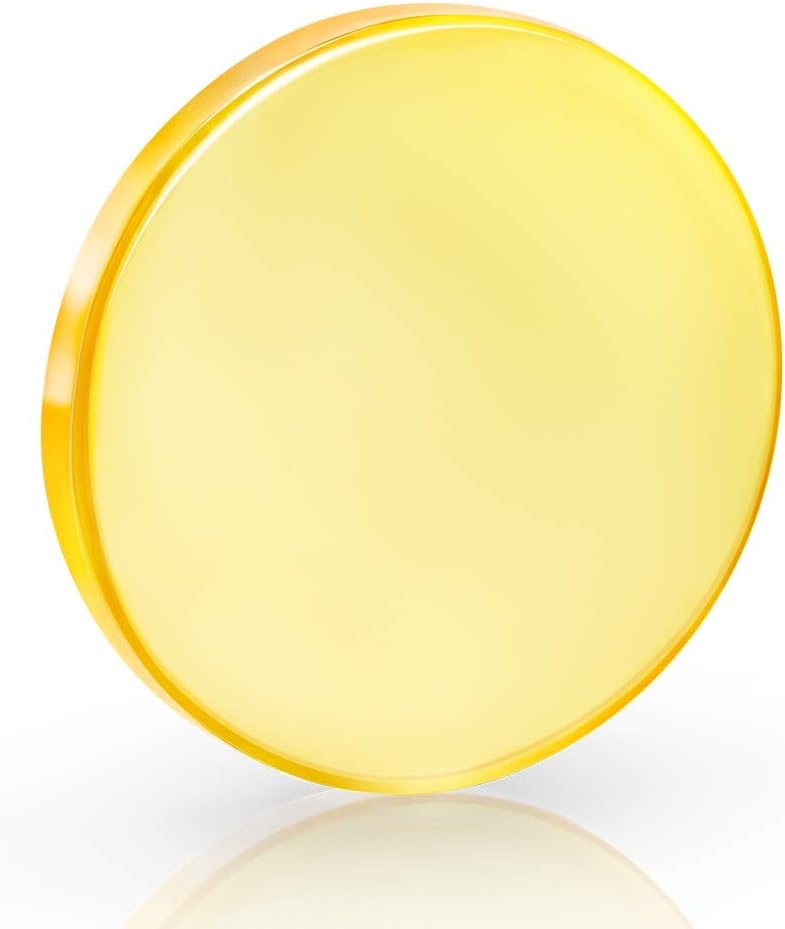
An 18mm zinc selenide lens with the same 2-inch focal length the K40 was designed around. It suits the popular 18mm air-assist heads, not the stock 12mm head.
Start with the head, not the lens. The stock K40 head seats a 12mm lens, and an 18mm lens simply will not go in. This XUNKUANER lens is for the 18mm air-assist heads that most owners fit as an early upgrade.
Why do owners move to 18mm at all? A bigger lens catches a beam that has wandered slightly off-centre, which makes alignment more forgiving. It also pairs with heads that carry an air nozzle, which keeps smoke off the lens. The Cloudray K40 head, for example, is made for 12mm and 18mm lenses at 50.8mm focal length.
XUNKUANER also sells a 25mm lens under the same name. That one is CVD ZnSe rated for 150W to 400W machines, and no K40 head seats a 25mm lens. For a K40, the 18mm version is the only sensible pick.
Measure before you order. Pull the old lens, put calipers across it, and note the diameter and thickness. Five minutes with a caliper saves a return and a week of downtime.
A word on the name: despite the word mirror in the title, this is a transmitting focus lens. It goes in the head under mirror three, not in a mirror mount.
| Spec | Value |
|---|---|
| Diameter | 18mm (0.71 in) |
| Focal length | 50.8mm (2 in) |
| Thickness | 2mm (0.08 in) |
| Material | PVD ZnSe |
| Coating | Antireflective, both sides |
| Rated transmittance | 99.9% |
| Power range | 30–90W CO2 |
| Laser type | CO2, 10,600nm |
| Lenses per pack | 1 |
| Lens dimensions | 0.71 × 0.71 × 0.08 in |
| 25mm version diameter | 25mm |
| 25mm version focal length | 50.8mm |
| 25mm version material | CVD ZnSe |
| 25mm version power range | 150–400W |
The 50.8mm focal length is the K40's default. If the lens coming out is also 2 inches, the focal point lands where it did before, and your bed, ramp gauge and material settings still hold. That is the quiet advantage of replacing like for like.
Change focal length and you change the machine. A shorter lens pulls the focal point up toward the head; a longer one pushes it down toward the bottom of the cabinet. On a stock K40 the bed and clamp sit at a height chosen for 2 inches, so any other lens means shimming the work or adding an adjustable bed.
| Focal length | Spot and depth | Typical K40 use |
|---|---|---|
| 38.1mm (1.5 in) | Smaller spot, shallow focus | Fine engraving, thin stock |
| 50.8mm (2 in) | Balanced | General cutting and engraving |
| 63.5mm (2.5 in) | Larger spot, deeper focus | Thicker cuts, straighter kerf walls |
| 101.6mm (4 in) | Largest spot, deepest focus | Uneven surfaces; rarely fits a K40 without a lowered bed |
Depth of focus is the reason people chase longer lenses. With a 2-inch lens, many owners set focus near the middle of a 3mm sheet and cut it in one pass. Thicker stock may need a second pass or a longer lens.
Treat that as direction, not a promise. Real spot size depends on the beam that arrives at the lens, which depends on the tube, the mirrors and the alignment.
For the ramp test and tape targets, follow the alignment guide.
Orientation is the one mistake that costs the most. The curved face of a focusing lens points up, toward the incoming beam, and the flatter face points down at the work. Upside down, the lens still focuses, but the spot is larger and cutting power drops.
This lens is PVD ZnSe with an antireflective coating on both sides. PVD material generally costs less than CVD and has a reputation among K40 owners for a shorter working life under heavy cutting. Plan on it as a consumable and keep a spare.
Store the spare in its case, away from the machine's fumes and out of sunlight. A lens left loose in a drawer picks up scratches before it ever sees a beam.
A lens fouls fastest when smoke reaches it. Air assist through the head nozzle keeps it clean for much longer, which is why the upgrade list puts the head and air supply early.
The main thing separating 18mm lenses is the grade of ZnSe. XUNKUANER uses PVD material. Mssoomm and CNCOLETECH sell 18mm lenses in CVD ZnSe, the grade used in industrial CO2 optics, and TEN-HIGH offers PVD with a wider choice of focal lengths.
CVD is the safer bet for a machine that cuts daily at high current. PVD is a reasonable choice for a spare, for a light-duty engraver, or for a first swap on a new head while you learn to align it. Neither grade survives smoke and fingerprints, so the cleaning habit matters more than the label.
Confirm these at the head:
Cost per hour of cutting is the fair comparison, not the sticker. A CVD lens that lasts longer can end up cheaper than two PVD lenses that each burn out early.
If your K40 still has the original head, stop here and read how to use a K40 first, then decide whether the head upgrade comes before the lens.
No. The stock K40 head takes a 12mm lens. This 18mm lens needs an upgraded head with an 18mm seat.
Curved side up, toward the incoming beam, flatter side down toward the work. Fitting it upside down enlarges the spot and costs cutting power.
CVD is the higher grade used in industrial CO2 optics and generally lasts longer under heavy cutting. PVD costs less and works well as a spare or on a lightly used machine.
Not if the lens you are replacing is also 50.8mm focal length. Any other focal length moves the focal point and needs a new focus setting.
No. The 25mm lens is for 150W to 400W machines, and K40 heads do not seat a 25mm lens.