Protect your eyes first
MCWlaser 10600nm Safety Glasses
OD5+ at 10,600nm, EN 207 certified, with 80% visible light through the lens
- Safety
- Fits the K40
A K40 is a Class 4 CO2 laser with a glass tube, a high-voltage supply and an open water loop. Set those three up properly and the rest of the machine is easy to learn.
Current as of September 2026Fill the water loop with distilled water or non-conductive coolant and start the pump before the laser ever fires. Ground the case, duct the exhaust outdoors, and wear OD5+ glasses rated for 10,600nm whenever the lid is open.


Every K40 install starts with the tube, because it is the most fragile part and the most expensive one to break. Open the rear bay before anything else and check the glass from end to end.
The paper manual that comes with a generic K40 is thin, so work through this installation checklist instead:
An OMTech K40+ arrives with better documentation and OMTech's two years of service, including technical guidance. Generic badges rely on the owner community instead.
| Hazard | What it does | What stops it |
|---|---|---|
| Invisible 10.6µm beam | Burns skin and the surface of the eye; bounces off shiny metal | Lid shut while firing; OD5+ 10,600nm glasses whenever it is open |
| High voltage | The tube supply runs at well over 10,000 volts and can hold a charge | Earth the case; unplug and wait before opening the electrics; never touch the tube's anode lead |
| Coolant failure | The tube overheats and cracks within minutes | Pump on before firing; check the return flow; add a flow switch |
| Fumes | Smoke, fine particles and irritant gases from every material | Duct sealed to the outdoors, fan running for every job |
| Fire | Flare-ups in wood, card and resin build-up under the work | Air assist, a clean bed, a CO2 extinguisher and a person watching |
| Chlorine plastics | PVC and vinyl release hydrogen chloride gas | Never cut them; skip any plastic you cannot identify |
General CO2 laser safety practice. The stock K40 often lacks a lid interlock and a water-flow switch, so these checks fall to the operator.
Inside the rear bay, the tube sits in a glass water jacket, and that water carries away the heat every second the laser fires. Without flow, the tube cooks itself.
Set up the loop in this order:
Never pour in automotive antifreeze. Its higher viscosity and pH cut the tube's output and shorten its life.
Now the ground. The rear panel has a grounding stud. Run a wire from it to a proper earth point, then check continuity from the case to the plug's earth pin with a multimeter. Many stock units ship with a weak ground path.
Treat the electronics bay as off-limits while plugged in. The tube supply runs at well over 10,000 volts, and the tube and supply can hold a charge after switch-off, so unplug and wait before you open it.
|
MCWlaser 10600nm Safety Glasses |
OMTech CO2 Laser Coolant |
OMTech CW-3000 Water Chiller |
 Cloudray 135W Air Compressor
 | |
| Type | Safety | Cooling | Cooling | Air assist |
| Power | — | — | 50W | 135W |
| Fits K40 | Yes | Check size | Check size | Check size |
| View offer | View offer | View offer | View offer |
Far infrared at 10,600nm, the K40's beam is invisible. You cannot feel it until it has burned, and it reflects off shiny metal at angles you do not expect.
The lid window stops the beam during normal work. The danger comes when the lid is open: alignment, test fires and fault-finding. That is exactly when owners get careless.
K40 laser safety glasses have to be rated for the CO2 wavelength. Check three things on the frame or spec:
The MCWlaser 10600nm glasses tick all three and pass 80% of visible light, so you can still see the beam path markings while aligning.
What does not count as protection:
Everyone in the room needs a pair while the lid is open. Keep the spare pair on a hook by the machine, not in a drawer.
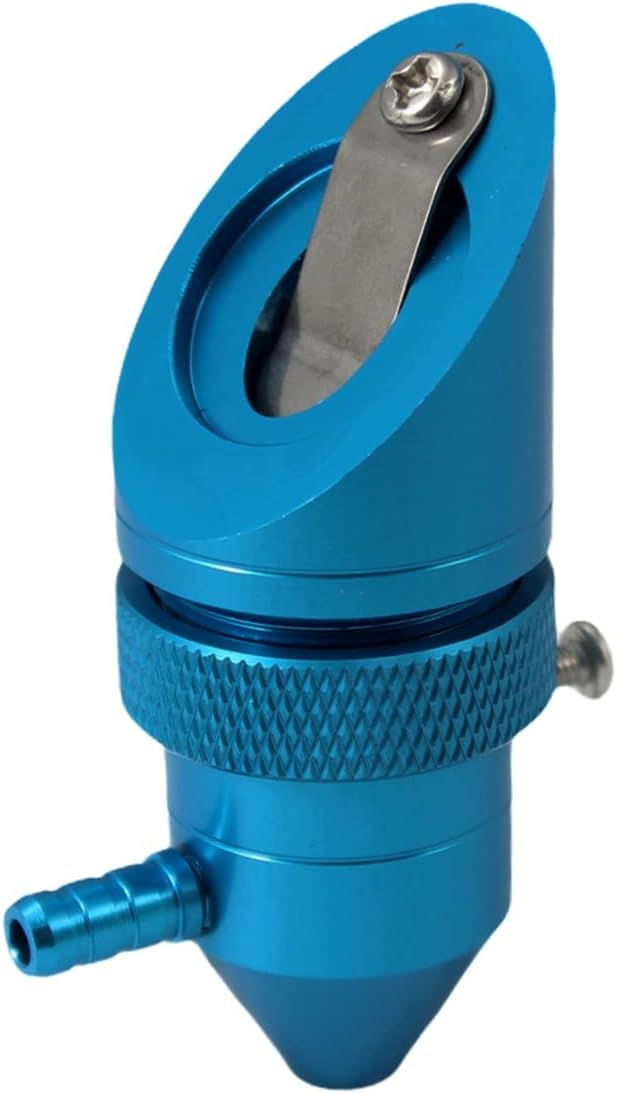
A 135W, 110V pump rated at 120L/min, enough to feed an air-assist nozzle through long cutting jobs. Air across the cut smothers small flames and keeps smoke off the lens.
View offerEvery material a K40 cuts turns into smoke, and some of it is nasty. The stock exhaust fan moves little air and leaks at the duct, so treat it as a placeholder.
A working K40 fume extractor setup has three parts:
Run the fan for the whole job and a minute after. If you smell smoke in the room, the duct leaks or the fan is too weak.
Other materials to keep off the bed: polycarbonate (it discolours and catches fire), ABS (it releases cyanide compounds), HDPE (it melts and flames), PTFE, and fibreglass. The K40 materials list covers what is safe.
Fire is the other risk. Never walk away from a running job, keep a CO2 extinguisher within arm's reach, and empty the scraps from under the bed.
Good K40 laser projects for a beginner teach one skill each. Work through these five in order and you will know your machine's power, focus and limits before you waste good stock.
Keep tube current modest from day one. On machines with an ammeter, most owners stay at or under about 15mA; a 40W tube's rated maximum is usually quoted near 18mA.
Log what works. A notebook taped inside the lid with speed, power and passes for each material saves more time than any upgrade.
Software depends on the controller. A stock board runs K40 Whisperer or CorelLaser, while a K40+ runs LightBurn; setup differs for each of the K40 software options. If cuts look weak even at sensible settings, check the mirror alignment next.
Glasses rated OD5 or higher at 10,600nm, ideally EN 207 certified. Diode laser glasses and sunglasses do not protect against the CO2 wavelength.
Use distilled water or a non-conductive laser coolant. Tap water conducts current and grows algae, and automotive antifreeze reduces tube output.
Yes. At minimum, seal the duct and vent it outdoors; most owners replace the weak stock fan with an inline duct fan.
Generic K40s ship with a short manual. OMTech supports the K40+ with documentation and technical guidance under its two-year service.
PVC, vinyl and faux leather (chlorine gas), polycarbonate, ABS, HDPE, PTFE and fibreglass. Bare metal will not cut at all.
No. Flare-ups happen fast in wood and card. Stay with the machine and keep a CO2 extinguisher nearby.