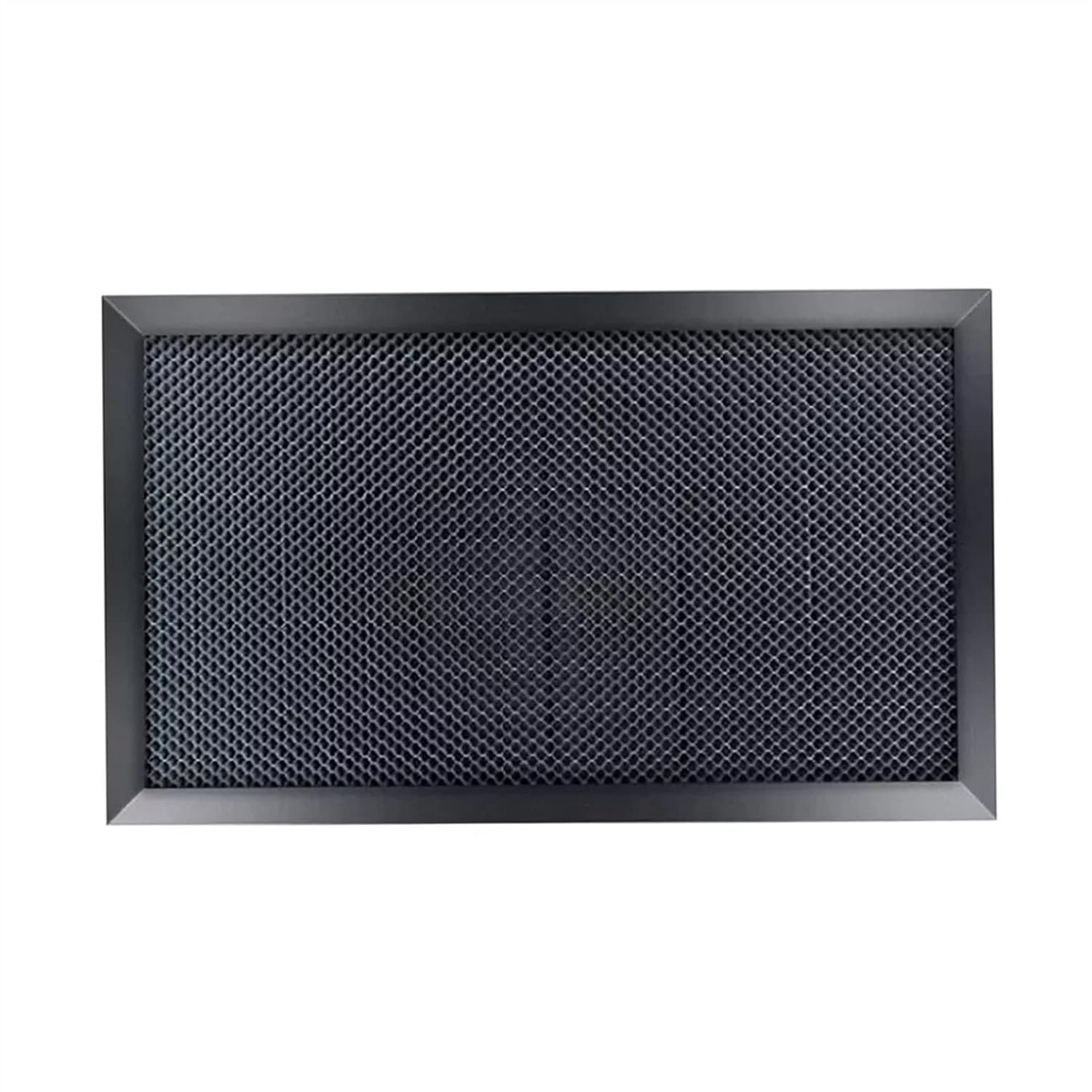
Identical design
zwqpeic K40 Honeycomb Bed
zwqpeic offers the same galvanized honeycomb and alloy edge in the same sizes.
- Bed & table
- Fits the K40
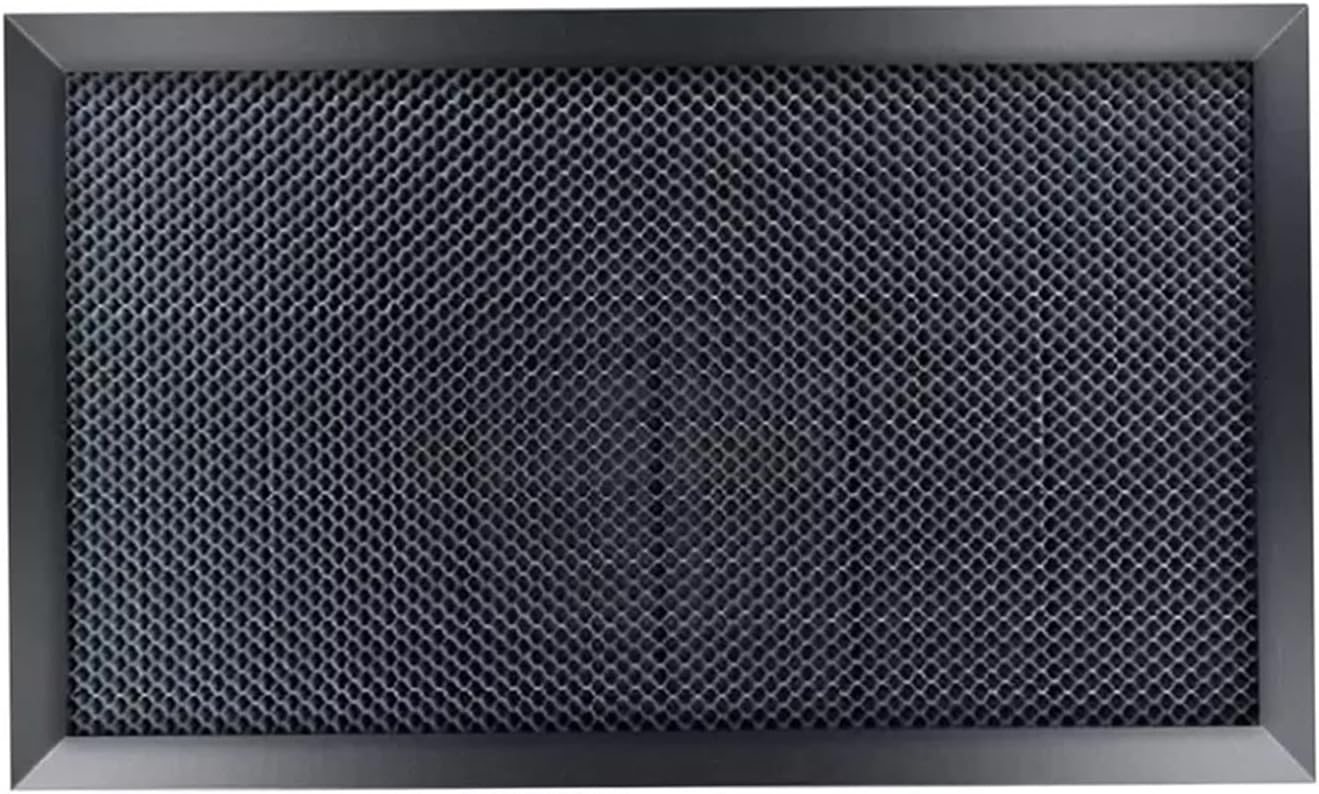
A galvanized iron honeycomb with an alloy edge for K40-series CO2 lasers, offered in 300x200mm, 350x250mm and custom sizes. The iron grid holds magnets, which makes warped sheet stock far easier to keep flat.
LSYAMQF builds this honeycomb from galvanized iron plate with an alloy strip around the edge. Galvanizing is a zinc coating over the iron, and it is there for one reason: to keep a steel part from rusting. In a garage shop where a K40 shares the air with a water chiller and damp winters, that coating earns its keep.
The iron core brings two more benefits. It is stiffer than a thin aluminum grid of the same height, and LSYAMQF describes the bed as highly flat and hard to deform. It is also magnetic, which no aluminum honeycomb can offer.
What each part of the build does for you:
Scratches in the zinc will not ruin the bed, but they are where rust starts. Set the grid down on its edge frame rather than dragging it across the bay floor, and store it dry if you swap it out for a solid engraving plate.
The LSYAMQF bed is described in exactly the same words as the zwqpeic honeycomb: same sizes, same materials, same 400 by 300 by 22mm version label. Treat them as the same design from two makers and pick the one that confirms the size you need.
| Spec | Value |
|---|---|
| Type | Honeycomb working table |
| Brand | LSYAMQF |
| Model number | LSYAMQF |
| Made for | K40-series CO2 laser cutters and engravers |
| This version | 400 x 300mm x 22mm |
| Height | 22mm |
| Size option | 300 x 200mm |
| Size option | 350 x 250mm |
| Custom sizes | Available |
| Honeycomb material | Galvanized iron plate |
| Frame | Alloy edging |
| Flatness | High flatness, not easy to deform (maker claim) |
| Laser type | CO2 cutting and engraving |
| Items in the box | 1 honeycomb table |
Plywood and MDF rarely come off the rack dead flat. A sheet that bows by a millimetre or two drifts out of focus across a long cut, leaving one end cut through and the other barely scored. On an iron honeycomb, magnets fix that in seconds.
Use small, strong magnets placed at the corners and along the bowed edge. Press the sheet flat, drop a magnet on it, and move to the next high spot. They leave no residue, they do not lift at the corners like tape, and they come off without tearing masking.
Magnets also make quick jigs. A strip of scrap held by two magnets becomes a fence for repeat parts, and an L of scrap squares every blank to the same corner. That saves time on batch jobs like coasters and tags.
Focus still has to be set. The 22mm height lifts the work above the old clamp level, so shim the bed or use a Z table until the top of your stock sits at the lens's focal distance; the K40 alignment guide covers the ramp test that finds it.
The version shown here is labelled 400 by 300mm by 22mm, while the size line in the description reads 300 by 200mm. Confirm which one ships. The difference decides whether it drops straight into a stock K40 or needs a modified cabinet.
| Size | Stock K40 | Modified K40 |
|---|---|---|
| 300 x 200mm | Matches the roughly 12 x 8 in travel | Fits, with spare room |
| 350 x 250mm | Measure the bay and duct | Often fits after duct trimming |
| 400 x 300mm | Larger than the travel; may not fit | Suits enlarged or rebuilt bays |
A larger grid than the travel is not useless. Owners who have extended their K40's work area, cut back the exhaust duct or rebuilt the bay can use the extra support, and even on a stock gantry a big grid gives a full sheet somewhere to rest. On an unmodified machine, though, a 400 by 300mm bed may simply not go through the opening.
Weight is not a worry at any size. The bigger question is the 22mm height on top of whatever base you build, because the finished surface has to land at focus with room to spare for thick stock.
Measure these before choosing a size:
The K40 dimensions guide has the cabinet and work-area figures. If you want the size question settled by a stated range instead, the ZQDWMND bed comes in five named sizes, including 200 by 300mm.


Every plywood cut leaves resin on the cell walls, and every acrylic cut leaves a film. It builds slowly, then starts to hold small parts, raise the surface in patches and stain the back of your work. A clean grid is a flat grid.
A cleaning routine that respects the zinc coating:
Clean every few sessions if you cut plywood daily, less often if you mostly engrave. Look for these signs that it is time:
Keep a second bed if you run long batches. Swapping in a clean grid while the dirty one soaks keeps the machine working and stops you rushing the drying step.
Empty the bay floor even more often. Debris under a honeycomb is fuel under a beam. A bed has a set slot in the K40 upgrade order, after the optics and air.
They are described in identical terms: galvanized iron, alloy edging, 300x200mm and 350x250mm sizes and a 400x300x22mm version. Buy from whichever maker confirms the size you need.
The 300x200mm size matches the K40's work area. The 400x300mm version is larger than the travel and may not fit an unmodified bay, so measure first.
Yes. The honeycomb is galvanized iron, so small flat magnets hold warped sheets flat. Keep them out of the head's path.
Brush the cells, soak stubborn resin in warm water with a mild degreaser, avoid strong acids that strip the zinc, and dry it fully before refitting.