Stated galvanized build
zwqpeic K40 Honeycomb Bed
zwqpeic names galvanized iron, alloy edging and a 300x200mm K40 size.
- Bed & table
- Fits the K40

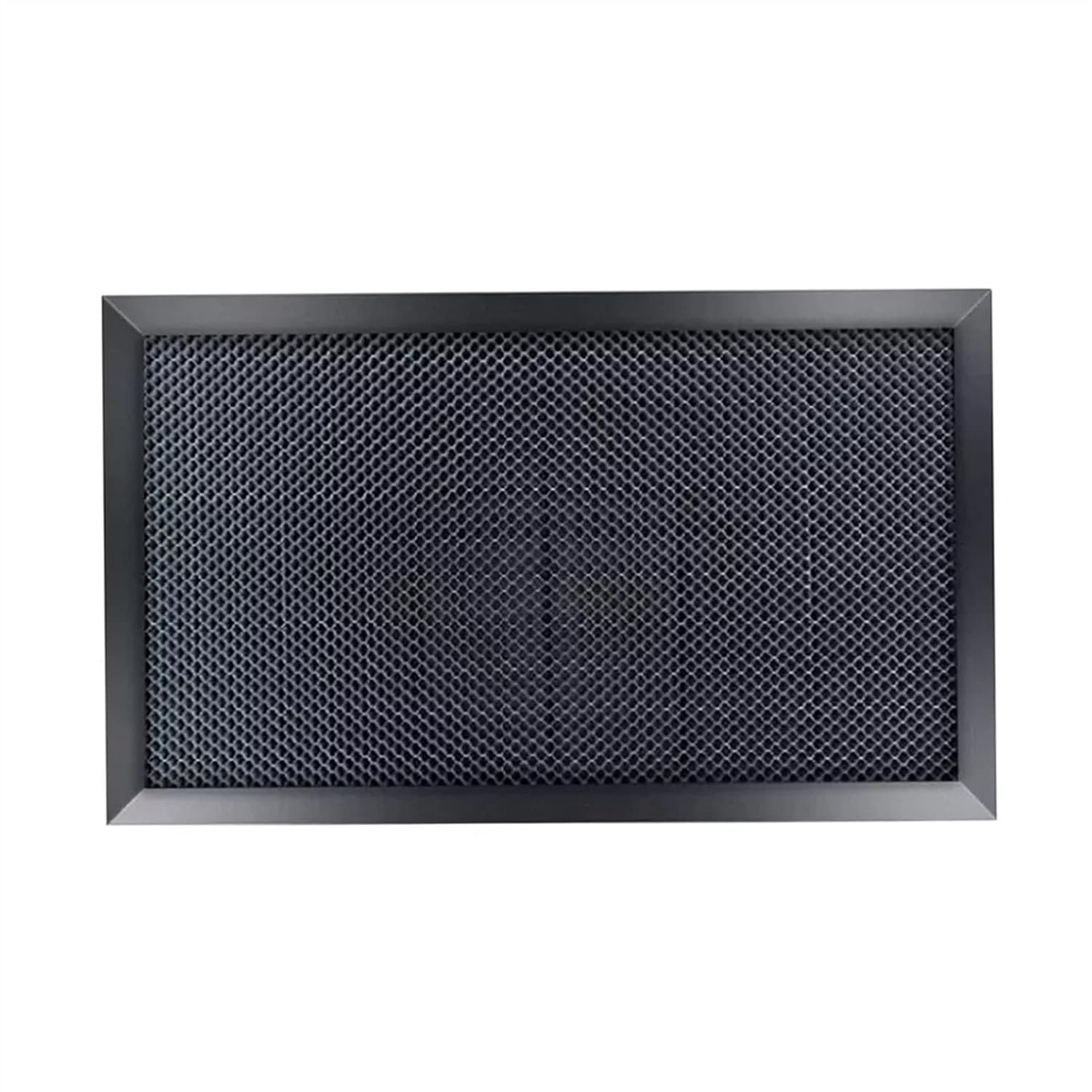
A honeycomb working table for CO2 lasers in five sizes, from 200x300mm to 300x400mm, with a stated 5.5mm cell. The two smaller sizes line up with the K40's work area.
ZQDWMND makes this honeycomb in five sizes: 300 by 400mm, 300 by 300mm, 250 by 350mm, 220 by 320mm and 200 by 300mm. The version shown here is the largest. For a K40, the two smallest are the ones to look at first.
The K40's head travels over roughly 300 by 200mm, or 12 by 8 inches. A bed that matches that area supports everything the beam can reach. A larger bed only helps if the cabinet has room for it, and many K40s have an exhaust duct lip at the back of the bay that eats into the depth.
| ZQDWMND size | Against a 300 x 200mm travel | Suits |
|---|---|---|
| 200 x 300mm | Matches it | A stock K40 bay |
| 220 x 320mm | A small margin all round | K40s with room past the travel |
| 250 x 350mm | Larger both ways | Trimmed ducts, roomier cabinets |
| 300 x 300mm | Deeper, square | Modified or custom machines |
| 300 x 400mm | Much larger | Bigger CO2 machines |
Measure before you choose:
Do not buy the largest size on the idea that more bed is better. On a stock K40 the extra area sits outside the beam's reach, and a bed that has to be forced through the opening will not come out easily for cleaning.
A margin of a few millimetres on each side makes it easier to lift the bed out for cleaning. Full cabinet figures are in the K40 dimensions guide.
| Spec | Value |
|---|---|
| Type | Honeycomb working table |
| Brand | ZQDWMND |
| This version | 300 x 400mm |
| Cell size | 5.5mm |
| Size option | 300 x 400mm |
| Size option | 300 x 300mm |
| Size option | 250 x 350mm |
| Size option | 220 x 320mm |
| Size option | 200 x 300mm |
| Laser type | CO2 engraving and cutting machines |
| Weight | 1.1 lb |
| Material | Not stated by ZQDWMND |
| Height | Not stated by ZQDWMND |
ZQDWMND states the cell size, which few honeycomb makers do. At 5.5mm across, each opening is small enough to support thin card, veneer and 3mm sheet without sagging, while still leaving open space under the cut line for the beam and smoke to exit.
The cell size matters most when you cut small parts. A piece has to span several cell walls to sit flat once it is free of the sheet. Anything narrower than a couple of cells can tip, catch the head or fall into the honeycomb.
The same openings that support the sheet also give the beam somewhere to go once it breaks through, and that is why you run a honeycomb instead of a solid plate.
Ways to work with a 5.5mm cell:
Air assist helps here too. A jet at the nozzle pushes smoke down through the cut and into the open cells, where the exhaust can pull it away. Pair the bed with an air-assist head and pump, both covered on the K40 upgrades page, and the underside of your cuts stays cleaner.
At 1.1 pounds this is a light bed, which makes it easy to lift out and clean. It also means it can shift when you slide a sheet across it or bump it while loading. Fix its position before the first job, not after a cut wanders off the edge.
For focus, the bed height matters less than where the top of your material ends up. Most K40s run a 50.8mm focal-length lens, measured from the lens. Run a ramp test on scrap, find the thinnest line, and cut a spacer to that gap. Set focus and check the mirrors in one session, using the K40 alignment guide.
Recheck the spacer whenever you move from 3mm to 6mm stock. Focus follows the top surface of the material, so every change in thickness moves the target.
If you change stock thickness often, shims get tiresome. A motorised bed like the Lightobject Power Z table lets you set focus per job, and a honeycomb can sit on top of it.
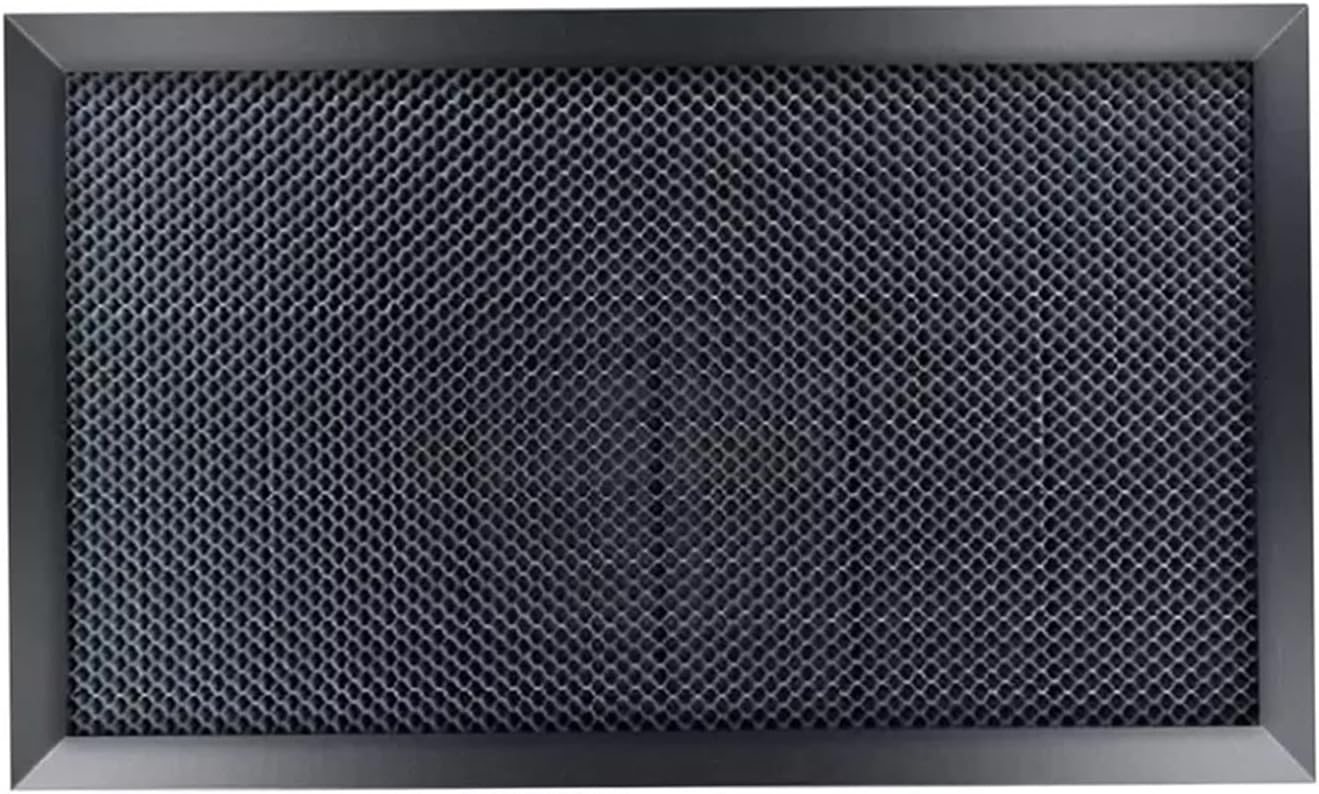

ZQDWMND's product description talks about reflector mirror coatings and silicon substrates, not honeycomb. That text does not describe this bed. What the product does state is the size range, the 5.5mm cell and the 1.1 pound weight; the rest you should confirm with ZQDWMND.
Questions worth putting to the maker:
Once it is in, care is the same as any honeycomb. Resin from plywood and acrylic builds up on the cell walls and bends the surface out of flat. Lift the bed every few sessions, brush it out, and scrape the worst deposits. Mask the back of show pieces, because the beam can mark the underside where it hits cell walls.
Check the bed flat before each big job. Lay a steel rule across it in two directions; a dip under a long cut line shows up as a cut that goes through at one end and not the other. A bent bed is cheaper to replace than a stack of ruined sheets.
If you want the build spelled out, the zwqpeic honeycomb and the LSYAMQF honeycomb both state galvanized iron with alloy edging, though their own size labels need confirming too. The ZQDWMND bed's advantage is the clear size range, with a 200 by 300mm option made for a K40-sized travel.
The 200x300mm size matches the K40's roughly 12x8 inch travel, and 220x320mm adds a small margin. Measure your bay first, including the exhaust duct lip.
ZQDWMND states 5.5mm. Small parts narrower than a couple of cells can tip, so leave tabs or cut them last.
ZQDWMND does not say. Its description covers mirror coatings instead, so get material and height from the maker in writing.
Yes. Measure the bed's height, then shim it until the top of your material sits at the lens's focal distance, found with a ramp test.