Best K40s
Replacement optics · 3 × 25mm Si

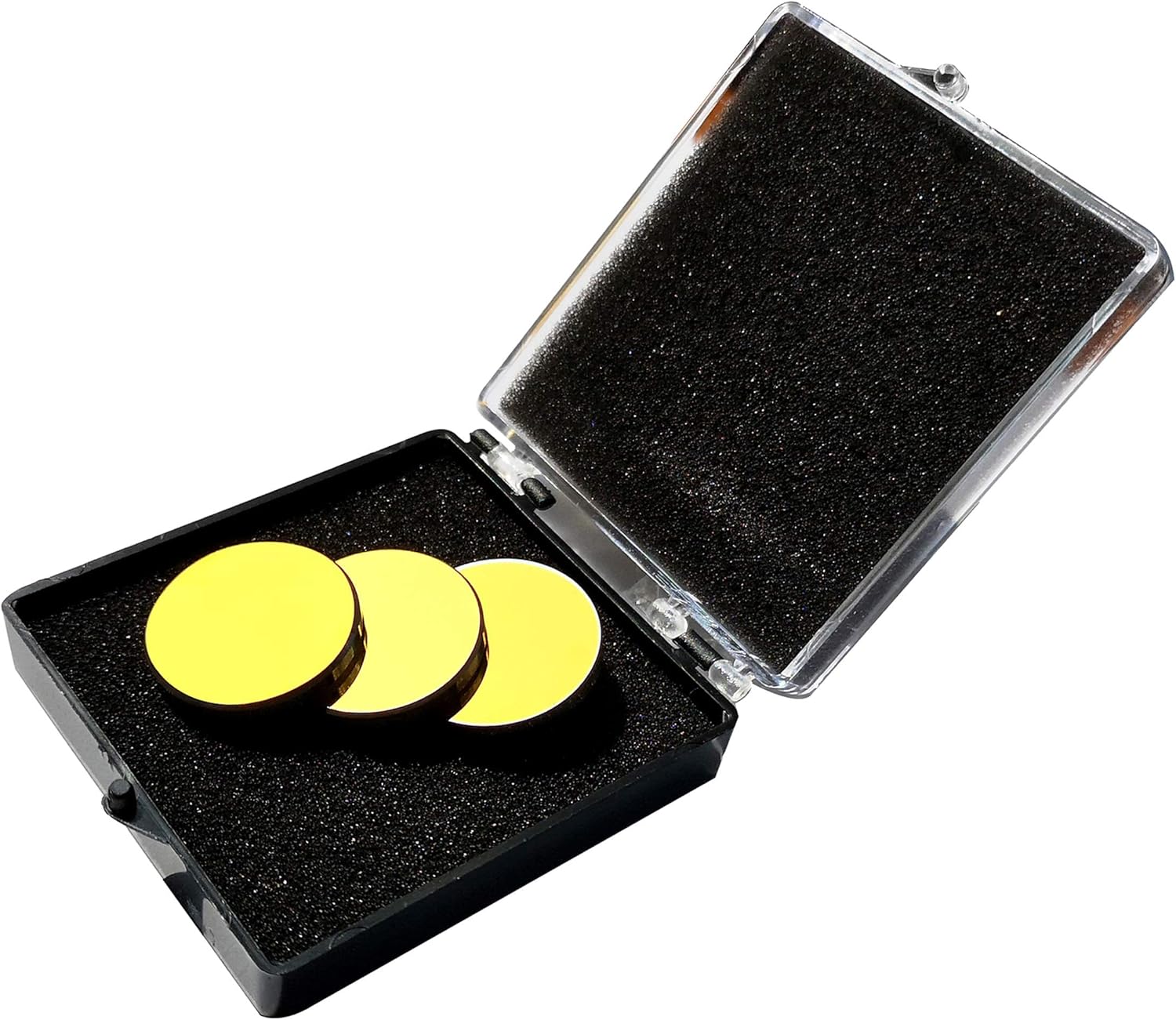
Qding CO2 Laser Mirrors

A three-pack of 25mm gold-plated silicon mirrors, 3mm thick and precision polished flat. They suit K40s that have moved to 25mm mounts, and they come with a firm warning to keep solvents off the coating.

  • Diameter25mm (0.98 in)
  • Thickness3mm
  • Pack3 mirrors
  • MaterialGold-plated silicon
  • Rated for60–400W CO2
  • CleaningNo alcohol or solvents
Right for
  • K40s already fitted with 25mm mirror mounts
  • Owners converting to 25mm for more alignment margin
  • Shops with good extraction, where mirrors stay clean
Wrong for
  • Stock 20mm K40 mounts
  • Smoky machines where mirrors need regular solvent cleaning
  • Humid, unheated workshops
View offer

25mm mirrors need 25mm mounts: most stock K40s have 20mm

The Qding set is sized for upgraded machines. Most K40s leave the factory with 20mm mirror mounts, and a 25mm mirror will not go into a 20mm seat. If you are still on stock mounts, this pack is the second half of a conversion, not a drop-in swap.

Why convert at all? A 25mm mirror presents a wider target. On a K40 the beam rarely hits dead centre on every mirror at every corner of the bed, and a bigger mirror keeps an off-centre beam on the reflective face instead of clipping the edge. Owners who fight alignment every week often find the extra margin worth the work.

  • Already on 25mm mounts: fit all three and realign.
  • On 20mm mounts: you need new mounts for mirrors one and two, and a head that seats a 25mm mirror.
  • Unsure: measure the old mirror with calipers before ordering anything.

Qding rates the mirrors for 60W to 400W. Do not read the lower figure as a minimum. A mirror has no lower power limit in practice; the range just tells you the coating tolerates far more heat than a K40 tube produces.

The mirrors are 3mm thick, the usual depth for CO2 mirror mounts, and precision polished flat. Qding does not publish a reflectivity figure for this set. Gold-plated silicon in general reflects well over 99% at 10,600nm, but that is the material class, not a Qding measurement.

The size change also affects spares. Once you convert, every future mirror order is 25mm, and the 20mm spares in your drawer become useless for this machine.

Three mirrors cover the whole beam path: one by the tube, one on the gantry, one in the head. Replace them together so every surface starts equal.

Specs

Measurements & ratings

SpecValue
Diameter25mm (0.98 in)
Thickness3mm (0.12 in)
ShapePlane, optically flat
SubstrateSilicon
CoatingGold plated
Mirrors per pack3
Wavelength10,600nm CO2
Power range60–400W
FinishPrecision polished and ground
CleaningAvoid alcohol and other solvents
StorageKeep away from water vapour and humidity
Mirror dimensions0.12 × 1.05 × 0.98 in
Weight1.12 oz

Plan the 25mm conversion before the mirrors arrive

A mirror conversion goes smoothly when the mounts, head and mirrors are all on the bench at once. Half a conversion leaves the machine down while you wait for parts. Work out the full list first, then order it together.

  1. Measure your current mirrors and mounts and photograph how they are fixed.
  2. Source 25mm mounts for positions one and two that bolt to your K40's brackets.
  3. Choose a head with a 25mm mirror seat and the lens size you want.
  4. Unplug the machine and wait before working inside; the tube supply holds a charge.
  5. Fit the mounts, seat the mirrors gold side to the beam, and snug the rings evenly.
  6. Align from scratch, starting at mirror one.

Expect alignment to take longer than a straight mirror swap. New mounts sit at new heights, and the tube may need shimming so the beam enters mirror one level. The K40 alignment guide covers the tape-target routine and how to square each mount.

Glasses and lid. Alignment means firing the tube with covers open. Everyone in the room wears OD5+ glasses rated for 10,600nm, pulses stay short and low power, and hands stay out of the beam path.

A beam alignment tool makes the job quicker.

The K40 upgrade guide puts mounts and optics in context with air assist and the bed, so you can batch jobs that need the machine opened up.

In the catalogue

Where it slots in

K40 laser models by type, September 2026. Highlighted: Qding CO2 Laser Mirrors.

Keep solvents off this coating, and keep the shop dry

Qding is unusually direct about the coating. It describes it as silicon-based and relatively fragile, and says not to wipe it with alcohol or other solvents. That runs against the routine many owners use on gold silicon mirrors, so follow the maker's word on these.

That makes prevention the whole game. A mirror you are not allowed to clean with solvent has to stay clean in the first place.

  • Air only. Clear dust with a hand bulb, never compressed shop air that may carry oil or water.
  • No touching. Handle mirrors by the edge with clean gloves; skin oil counts as contamination you cannot wash off.
  • Fix the smoke. Good exhaust and head air assist keep residue away from the optics.
  • Replace, do not scrub. A mirror with baked-on film or burn spots is done.

Qding also warns about water vapour. Residual moisture in a humid room can lift the coating. Store spares sealed with a desiccant, and do not run cooling water so cold that the machine sweats inside.

Condensation is a warning sign for the whole machine. If water forms on the optics, it may also form on the tube and high-voltage lead, which is dangerous. Keep coolant near room temperature, and let a cold machine warm up before firing.

Check the mirrors on a schedule rather than when cuts go weak. A quick look with a torch every few sessions catches a film while it is still loose enough to blow away.

This coating suits a clean, dry, well-ventilated shop. If your K40 lives in a damp garage with a stock exhaust fan, a molybdenum mirror that tolerates scrubbing will serve you better.

Also consider

Worth comparing

1 Cloudray CO2 Laser Mirrors
25mm gold silicon with a stated figure Cloudray CO2 Laser Mirrors
Three 25mm Si mirrors rated over 99.2% reflectivity.
  • Replacement optics
  • 25mm optics
  • Fits K40-size CO2 lasers
View offer

Qding against the 25mm silicon sets from Cloudray and CNCOLETECH

At 25mm the choices are close. Several makers sell three gold silicon mirrors, 3mm thick, rated well past K40 power. The differences sit in published figures, packing and care instructions.

SetMaterialStated reflectivityNotable
Qding 25mmGold siliconNot statedNo solvents on coating
Cloudray 25mmGold siliconOver 99.2%Rated to 300W
CNCOLETECH 25mmGold siliconUp to 99.8%Vacuum packed, single pieces
TEN-HIGH 25mmMolybdenumLower, as bare MoUncoated, scrub tolerant

The Cloudray set and the CNCOLETECH set both publish reflectivity, which makes them easier to judge. TEN-HIGH's molybdenum option gives up some reflectivity for a surface you can clean hard.

  • Pick Qding if your mounts are 25mm and your shop is clean and dry.
  • Pick a published-figure Si set if you want numbers to compare.
  • Pick molybdenum if smoke and humidity are facts of life in your shop.

Pack size is identical across the four, so compare on care and conditions, not on count. Three mirrors in each case means one full beam path with no spare.

Whatever you choose, pull the lens for inspection in the same session. A cloudy lens wastes more beam than any mirror difference in this comparison. The K40 setup guide lists the checks worth doing before the first cut on new optics.

Shop talk

Fit & install questions

Do Qding 25mm mirrors fit a stock K40?

Usually not. Most stock K40 mounts take 20mm mirrors, so 25mm mirrors need upgraded mounts and a head with a 25mm mirror seat.

How do I clean these mirrors?

Qding says to avoid alcohol and other solvents. Blow dust off with a hand bulb, handle only by the edge, and replace a mirror that has baked-on residue.

Is 60–400W a problem on a 40W K40?

No. Mirrors have no lower power limit in practice; the rating shows how much heat the coating tolerates.

Why would I move to 25mm mirrors?

A wider mirror keeps a slightly off-centre beam on the reflective face, which makes alignment more forgiving across the whole bed.