- Replacement optics
- 20mm optics
- Fits K40-size CO2 lasers
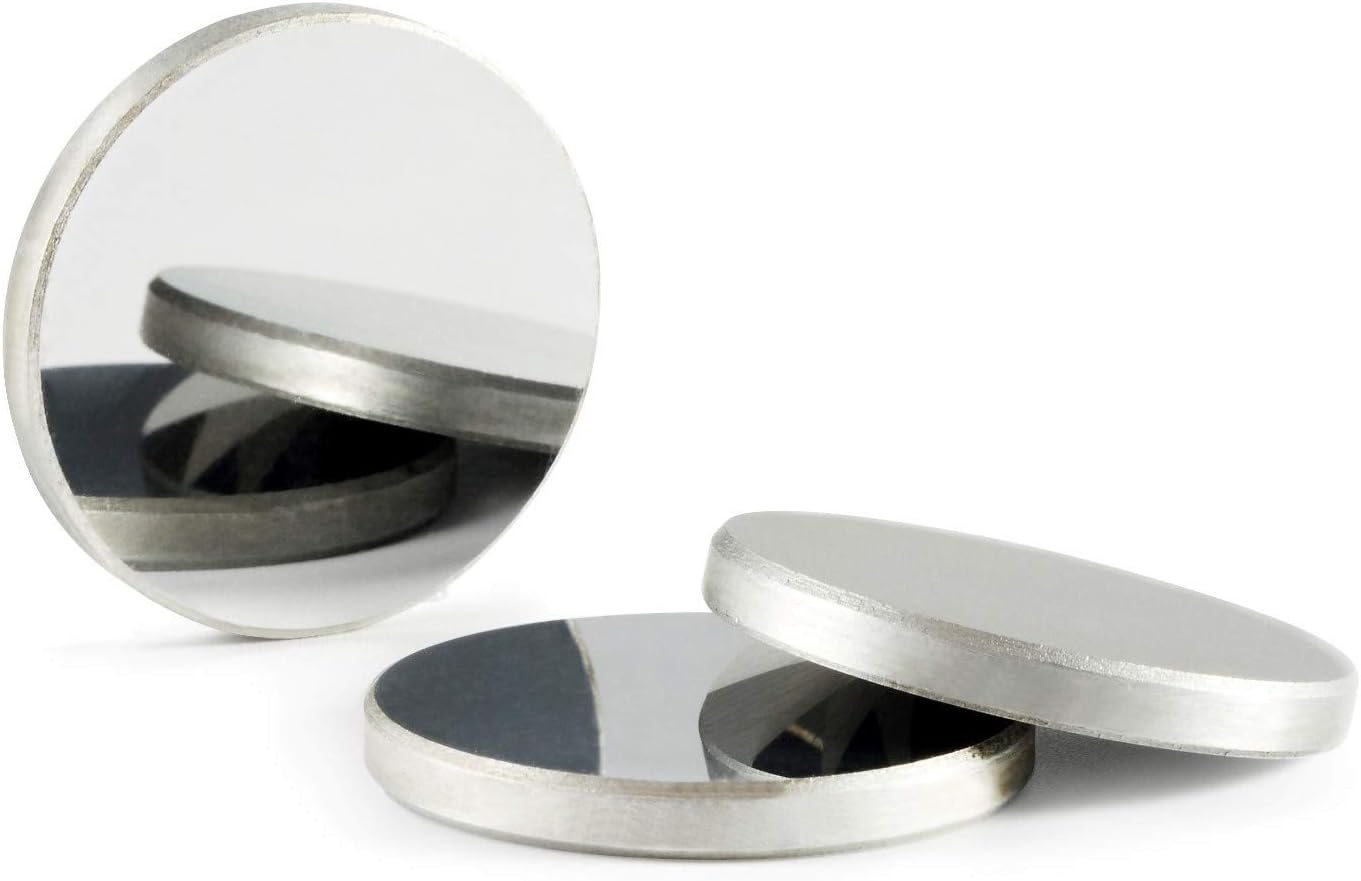
Three flat molybdenum mirrors with no coating at all, just a hard polished metal face. The lead set is 30mm for large mounts; TEN-HIGH also makes 25mm molybdenum and a 20mm gold-plated K9 glass set that fits stock K40 mounts.
Most CO2 mirrors are a disc with a thin reflective coating on top. TEN-HIGH's molybdenum mirrors skip the coating. The polished metal itself does the reflecting, and that changes how they age, how they fail and how you clean them.
Molybdenum is a hard, heat-tolerant metal. With no coating to wear through, there is no gold film to scratch, peel or burn off. TEN-HIGH describes the surface as extremely tough and resistant to high temperature and wiping, and says the mirrors suit harsh working environments.
The trade-off is reflectivity. TEN-HIGH quotes a figure above 99.2%, labelled as transmittance, which for a mirror means how much of the beam it returns. Uncoated molybdenum is generally rated a little below gold-coated silicon; OMTech, for example, rates its own molybdenum mirrors above 98%. Across three bounces, that gap costs a few percent of beam power.
If your K40 lives in a garage or shed where dust settles on everything, molybdenum's tolerance for cleaning outweighs the small loss. If your air is clean and extraction is strong, gold on silicon returns a little more of the beam.
| Spec | Value |
|---|---|
| Pieces | 3 mirrors |
| Diameter | 30mm (1.18 in) |
| Thickness | 3mm |
| Material | Molybdenum (Mo) |
| Coating | None; polished metal surface |
| Shape | Plane (flat) |
| Rated figure | Above 99.2%, as quoted by TEN-HIGH |
| Wavelength | 10.6 µm CO2 laser |
| Power range | 40W to 100W |
| Surface | Precision sliced, ground and polished; wipe resistant |
| Package size | 3.7 x 2.72 x 0.63 in |
| Packed weight | 1.76 oz |
| Other versions | 25mm Mo x3; 20mm gold-plated K9 glass x3 |
| In the box | 3 mirrors |
TEN-HIGH's lead set is 30mm, with a 25mm molybdenum version beside it. A stock K40 uses 20mm mirrors in 20mm mounts, and neither molybdenum size will go into them. Measure your mounts before you order anything.
Unplug the machine, remove a retaining ring with a nut tool, support the mirror with a gloved finger and check the diameter with calipers. Do the same at all three positions.
| Your mounts | TEN-HIGH choice | Notes |
|---|---|---|
| 20mm (stock K40) | 20mm gold-plated K9, 3 pcs | Budget glass; for Mo in 20mm, look at OMTech's set |
| 25mm (upgraded mounts) | 25mm molybdenum, 3 pcs | Direct fit |
| 30mm (large machines) | 30mm molybdenum, 3 pcs | Direct fit, the lead set |
Larger mirrors help on long beam paths where the beam drifts or spreads, which is why bigger machines use them. A K40's path is short, so changing mounts just to fit larger mirrors buys little. Change mounts when yours are loose, cracked or out of adjustment range, and pick the mirror size to suit the new mounts.
Check the mount thickness too. All three TEN-HIGH versions are 3mm, the common size, so the retaining rings on most mounts will seat them without spacers.
If you want molybdenum in the stock 20mm size, the OMTech 20mm Mo set is the direct route. For 30mm with gold on silicon instead, BLUETIMES makes that size.
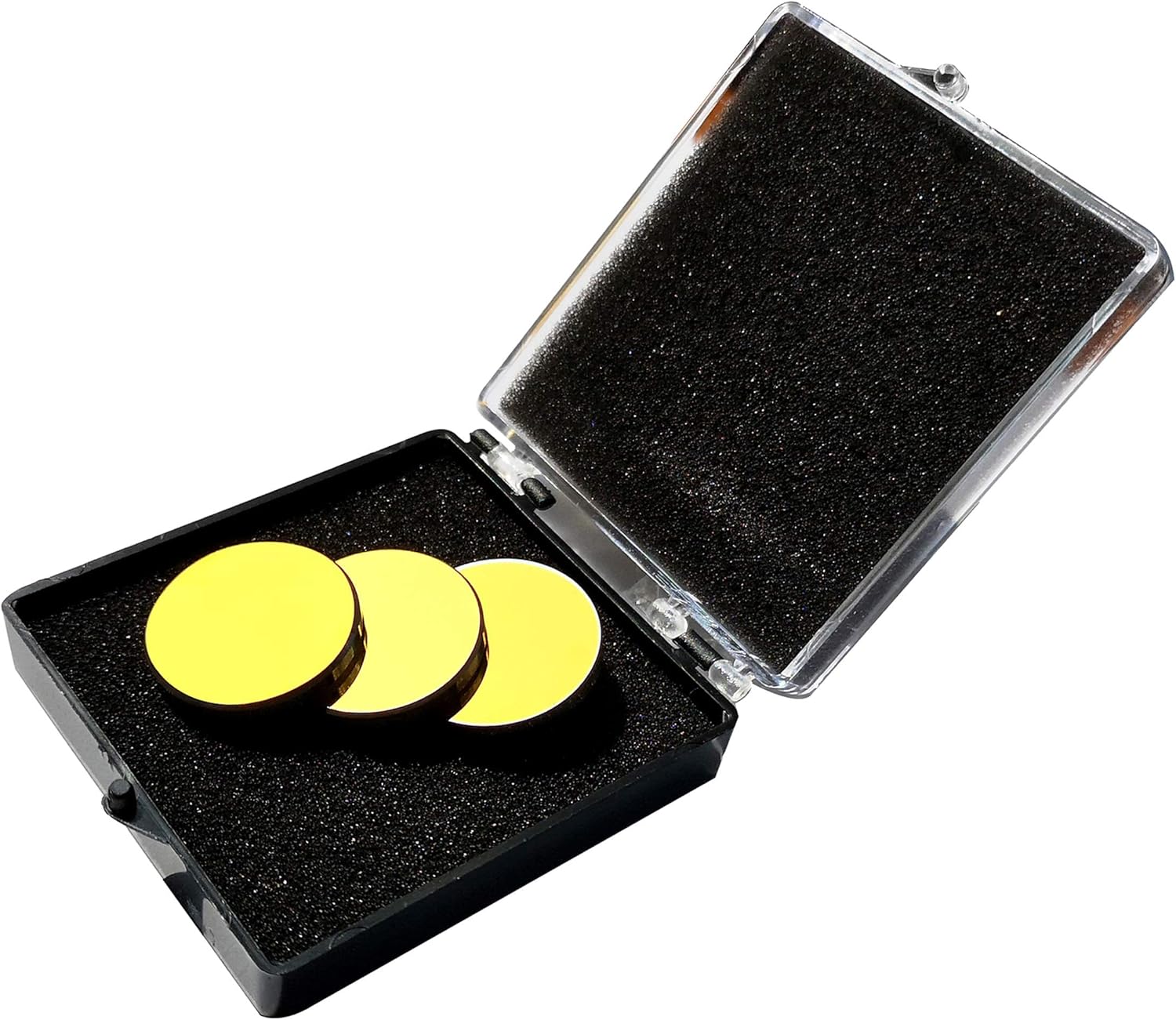
TEN-HIGH's third version is not molybdenum at all. It is three 20mm mirrors in K9 optical glass with gold plating, the same kind of mirror many K40s ship with. It fits stock mounts directly and costs the least.
K9 glass mirrors have a place, but know their limits. Glass conducts heat poorly, so the beam spot stays hot, and once the gold wears or burns through, the mirror is done. They are the opposite of molybdenum: cheap and fragile where Mo is tougher and longer lived.
| Quality | Molybdenum (30mm, 25mm) | Gold-plated K9 (20mm) |
|---|---|---|
| Surface | Bare polished metal | Thin gold coating on glass |
| Cleaning tolerance | High | Low; wipe gently |
| Heat handling | Good | Poor |
| Fits stock K40 mounts | No | Yes |
| Best use | Dirty environments, large mounts | Budget spares, light use |
Handle K9 mirrors even more gently than silicon. Hold them by the rim in nitrile gloves, blow dust off before any wipe, and use a single light pass of isopropyl alcohol on lens tissue. Pressure or circular rubbing strips the gold quickly, and a scuffed glass mirror is scrap.
A K9 set makes sense as cheap spares, or to get a K40 with burnt stock mirrors cutting again today. For a longer-term upgrade in standard 20mm K40 mounts, gold-plated silicon or 20mm molybdenum from other makers lasts better.
Whichever material you choose, fit all three positions in one session and keep the set matched. A mixed path of one tough molybdenum mirror and two tired glass ones leaves the worst surface setting the limit on your cutting power.
The practical payoff of molybdenum is at cleaning time. A gold film demands one light wipe and no pressure. A bare molybdenum face tolerates a firmer wipe and repeated cleaning without losing its surface, which is why it suits smoky shops.
Firm is not careless. Grit dragged across any mirror scratches it, so remove loose dust first.
Even molybdenum should be replaced if the beam spot shows a pit or a burn that cleaning cannot touch. A damaged spot scatters the beam and wastes power.
Set a routine that suits the shop. In a dusty space, a quick look at each mirror before a long job and a proper clean every week or two keeps residue from baking on. Molybdenum forgives a missed clean better than gold does, but it does not forgive a burn.
After fitting new mirrors, realign the whole path from the tube forward. The alignment walkthrough explains the tape-target method, and 10600nm safety glasses belong on your face for every test pulse.
Against the other sets, TEN-HIGH's molybdenum mirrors are the rugged choice for large mounts. Gold-on-silicon sets from Cloudray, CNCOLETECH and BLUETIMES reflect a little more but need gentler handling. The upgrade guide shows how extraction and air assist cut cleaning frequency whichever mirrors you run.
The 30mm and 25mm molybdenum sets need larger mounts. Stock K40 mounts take 20mm, which TEN-HIGH offers only as gold-plated K9 glass.
It is tougher and tolerates firm cleaning, with no coating to burn off. Gold on silicon reflects slightly more of the beam but needs gentler handling.
Yes. Blow off dust first, then wipe with isopropyl alcohol on lens tissue. The bare metal takes firmer cleaning than a gold coating.
No. A K40's tube is 40W, well inside the rating.